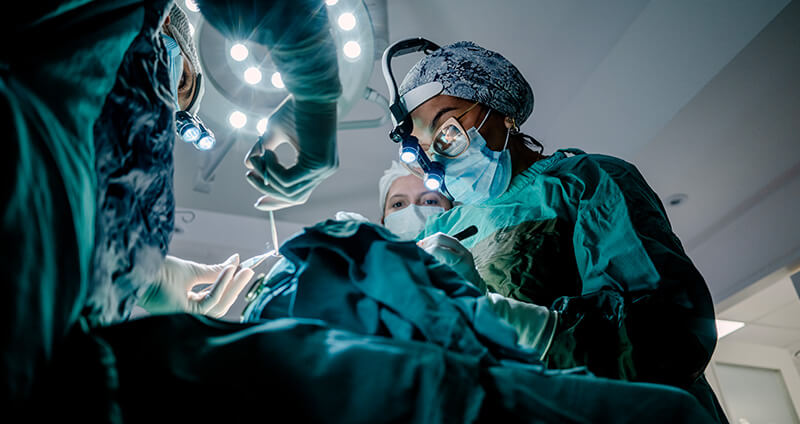
Minimally Invasive Knee & Hip Replacement

What Is Minimally Invasive Joint Replacement?
Minimally invasive joint replacement is an advanced surgical technique used during hip and knee replacement procedures. Unlike traditional joint replacement surgery, which often requires larger incisions and greater disruption of surrounding tissues, minimally invasive techniques are designed to reduce trauma to muscles, tendons, and soft tissues.
At Fox Valley Orthopedics, minimally invasive approaches may be used for both hip and knee replacement procedures when appropriate for the individual patient.
The goal is to provide the same long-term benefits of joint replacement while potentially improving the early recovery experience.
In the case of hip replacement, the anterior approach is considered muscle-sparing and minimally invasive.
In the case of knee replacement, it is often called muscle-sparing, subvastus or quick knee replacement. These are all different terms for minimally invasive.
What Conditions Can Be Treated with Minimally Invasive Joint Replacement?
Minimally invasive techniques are most commonly used to treat advanced joint damage caused by:
- Osteoarthritis
- Rheumatoid arthritis
- Post-traumatic arthritis
- Degenerative joint disease
- Chronic hip pain
- Chronic knee pain
- Joint damage caused by injury
Patients considering hip replacement or knee replacement may be candidates depending on their anatomy, overall health, and severity of joint damage.
How Is Minimally Invasive Joint Replacement Different from Traditional Joint Replacement?
The primary difference is the surgical approach.
Minimally invasive techniques generally involve:
- Smaller incisions
- Less disruption of muscles and soft tissues
- Specialized surgical instrumentation
- Advanced surgical planning
- Potentially faster early recovery
The implants used are often similar to those used in traditional joint replacement procedures. The difference is in how the surgeon accesses the joint and performs the operation.
What Are the Potential Benefits of Minimally Invasive Joint Replacement?
Benefits may include:
- Smaller surgical incisions
- Less trauma to surrounding tissues
- Reduced postoperative discomfort
- Shorter hospital stays
- Earlier mobility
- Faster return to routine activities
- Smaller scars
Every patient’s experience is unique, and results can vary based on age, health status, rehabilitation participation, and the complexity of the procedure.
Who Is a Candidate for Minimally Invasive Joint Replacement?
Many patients with severe hip or knee arthritis may be candidates for minimally invasive surgery.
You may qualify if you:
- Have persistent joint pain
- Experience stiffness and loss of motion
- Have difficulty walking or performing daily activities
- Have not found relief through conservative treatments
- Are healthy enough to undergo surgery
Not every patient is a candidate for a minimally invasive approach. Your surgeon will evaluate factors such as:
- Body type
- Joint deformity
- Bone quality
- Previous surgeries
- Overall health
A comprehensive evaluation will help determine the safest and most effective surgical option.
What Happens During Surgery?
The specifics depend on whether a hip or knee replacement is being performed, your anatomy and surgeon preferences.
In general, the procedure involves:
- Making a smaller surgical incision.
- Accessing the damaged joint while minimizing disruption to surrounding tissues.
- Removing damaged cartilage and bone.
- Positioning and securing the replacement components.
- Testing alignment, stability, and range of motion.
- Closing the incision and preparing for recovery.
The procedure is performed by an orthopedic joint replacement specialist using advanced surgical techniques and instrumentation.
What Is Recovery Like After Minimally Invasive Joint Replacement?
Most patients begin moving shortly after surgery. Most even walk on the same day. The whole idea behind these techniques is to make recovery easier.
Recovery may include:
- Walking assistance devices initially
- Physical therapy
- Range-of-motion exercises
- Strengthening programs
- Swelling management
- Progressive return to daily activities
Many patients are surprised by how quickly they are able to stand and walk following surgery, although full recovery continues for several months.
Why Choose Fox Valley Orthopedics for Joint Replacement?
Fox Valley Orthopedics offers comprehensive care for patients suffering from hip and knee arthritis, from diagnosis and conservative treatment through advanced joint replacement surgery.
Our team focuses on:
- Personalized treatment plans
- Advanced surgical techniques
- Minimally invasive approaches when appropriate
- Comprehensive rehabilitation support
- Long-term joint health and function
Whether you’re considering hip replacement or knee replacement, our goal is to help you reduce pain, restore mobility, and return to the activities you enjoy with confidence.
Minimally Invasive Joint Replacement Surgeons
-
 Kenneth S. Chakour, MD, FAAOS, FAAHKSHip & Knee Replacement
 -
 David R. Morawski, MD, FAAOSHip & Knee Replacement
 -
 Nicholas R. Pagani, MDHip & Knee Replacement